Showing posts with label africa. Show all posts

07 December 2012

Lose Your Mother

Poetry readings and I don't always get along. I find them tiring. I communicate better with words on page than in the air around me. Listening for more than 20 minutes and I get a bit ADHD and start to examine the walls of the room I'm in for peeling paint.

First image from a search - 'poetry reading'
I have a similar problem with music. I don't really absorb lyrics while listening. Not in a 'I understand the thesis of the song' kind of way. More in a 'words are happening' kind of way.

Tonight, J and I went to a great poetry reading at Collected Works in downtown Santa Fe. Muse Time Two is a series that pairs a local NM poet with a wider-known more established writer. The pairings often illuminate each authors work. I like the idea.

Tonight's reading was by Connie Voisine and Martha Collins. Voisine is the director of the writing program at NMSU in Las Cruces. Her poetry was beautiful.

Collins read from her books Blue Front (2006) and White Papers (2012). They are companion books about race, specifically race from a white American point of view.

Blue Front seems to be the stronger of the two books. It is centered around Collins' father witnessing the hanging in 1909 of Will James. There were 10,000 participants.

I want to let that number linger for a second. 10,000 people helped hang someone in 1909 in Cairo, Illinois in front of a restaurant named the Blue Front. In front of a 5 year-old boy. Below is a photo of the event.
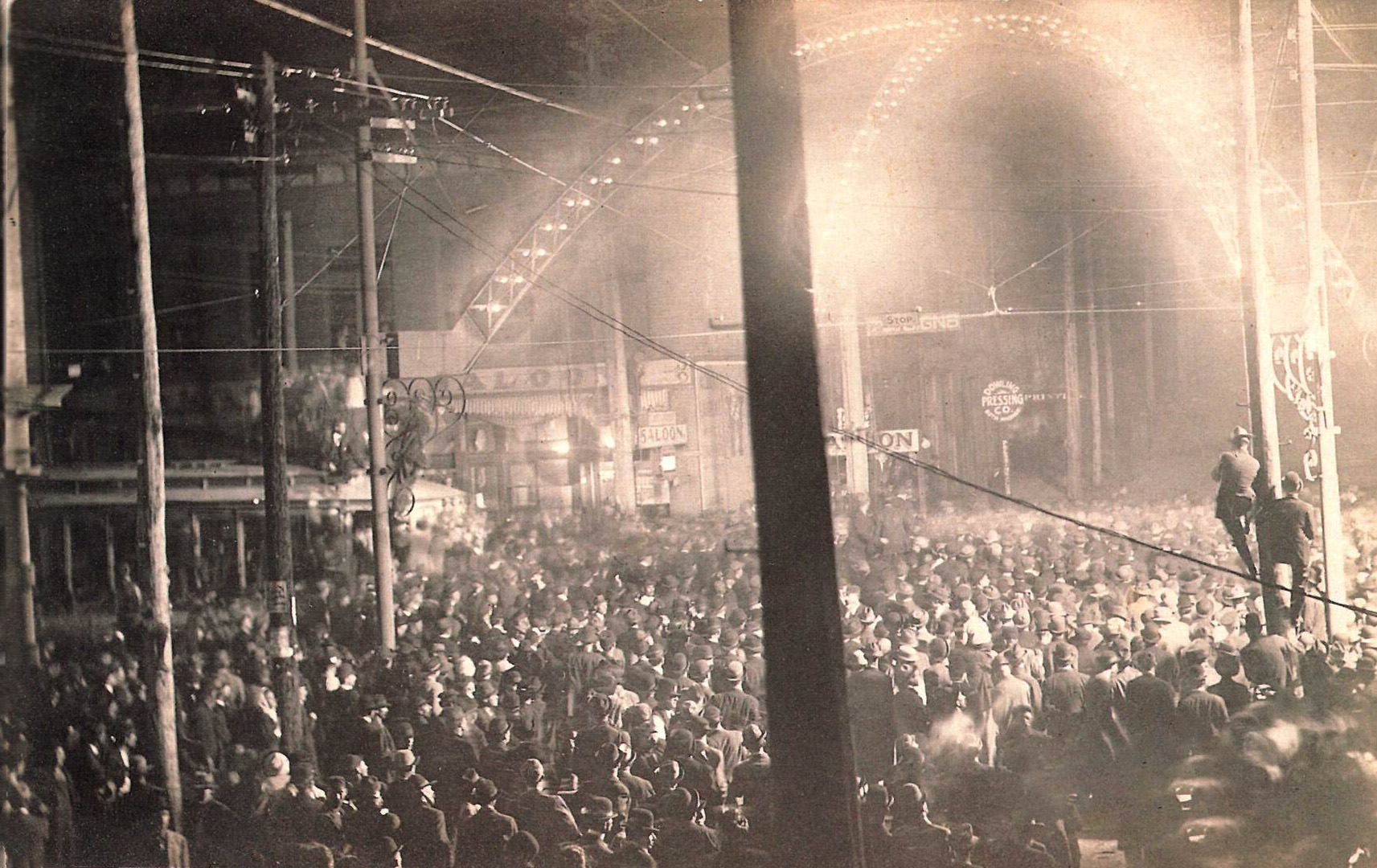

The poems Collins read were a little too disjointed, a little too knowing. There was an aura of self-consciousness. Too aware of the topic. Obviously you are aware of it, but it was all a touch too blunt. Too 'white liberal guilt'. The moments of brilliance came in the unanswered and cut off questions. She had an entire poem with each line starting 'Because...' and not a one had an ending.

My stumbling into Collins poetry is an interesting coincidence. I just read Lose Your Mother by Saidiya Hartman. A similar examination of race but from the other side.

Hartman examines the African slave trade by taking a trip to Ghana. She attempts to connect with a place that is meant to be 'home'. She finds ambivalence and, in some cases, outright anger at her presence. At her insistence of bringing up the horrors of selling people.
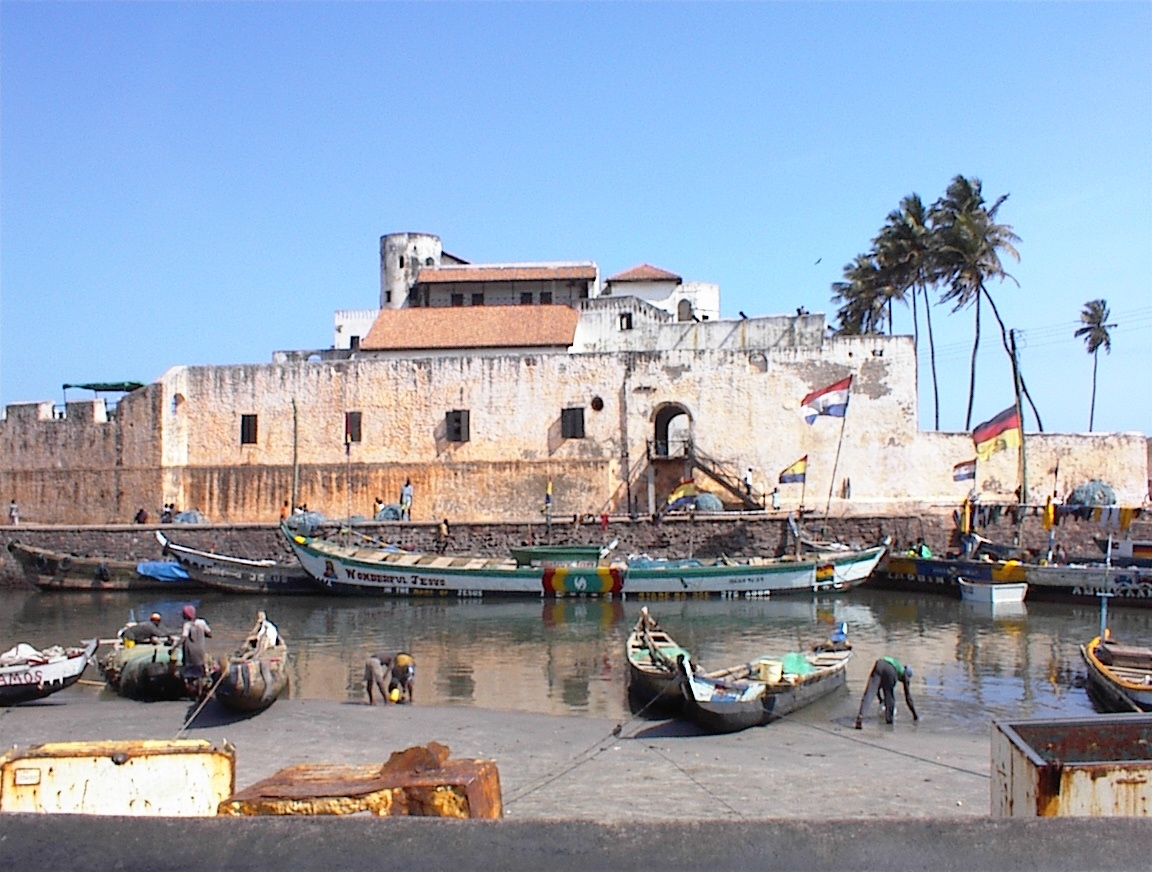
Elmina Castle - Portuguese slave trading post
Ghana's politics on slavery are not easy water to tread. There is a modern slave trade that continues to this day. The view is that you are selling strangers, criminals, the non-religious and is therefor not a problem. Hartman paints several scenes of people telling her that the trade was bad when white men did it. They caused the problem. Her attempts to get locals to address the nobles of Africa selling off their own is met with silence.

Both of these books attempt to address race in a new way. From a different entry point. Collins comes at it with poetry and by addressing her whiteness. And using that as a means to open up what her being that means in America. She addresses blackness by acknowledging she can only address whiteness.

Hartman attempts to come at the topic of slavery honestly. She wants to see how the African tribes were complicit in the trade. She admits that going to Ghana, standing in the old Elmina castle does nothing to fill the empty space she feels. As a white man reading her book, I felt like that is the problem of the slave trade. There is no way to fill that space.

Both of these women address race calmly, without anger or melodrama. They also do it by telling their own stories. Collins tells that of her father and that 10,000 strong lynch mob. Hartman writes herself into the narrative, allowing us to see her disappointment and struggle with the topic.

Hartman manages a delicate balance of listing those accountable while not pointing a finger at the reader. Collins is less successful, but she has less room to do so. It is not her topic to be gracious about. It is not a topic to be gracious about. It is to Hartman's credit that she has chosen to open the topic up in this way.

I am grateful for Hartman's abilities to let me, a white man, into the conversation. I feel like it comes across condescending to say, but it is true. Being honest about our feelings on race is the first step to even begin to pretend to fix the problem.

07 November 2012

Dust Jacket : Search Sweet Country

Search Sweet Country (1986)
Designed by: Brian McMullen

This is a 25th Anniversary edition from McSweeney's. Brian McMullen is their head artistic director. He also oversees their new children's book division.

The book is set in Ghana. This is important as a starting point for the image on the cover. It is clearly an African textile print. Almost to a generic point.

These printed fabrics are beautiful. It is an obvious reference point when dealing with a book that has been called "one of the greatest novels ever to come out of the African continent". The cover is even more important when you consider that the book follows a large cast of characters.

From McSweeney's book flap:

Bringing to life the bustling markets and bars in dizzying, lyrical prose, Laing weaves a story filled with bizarre and often melancholy characters...Their collective narratives create a portrait of a country where colonialism is dying, but democracy remains elusive.

A patchwork.

Of course McMullen chose to render the fabric in soft greens and browns. Tilted away from the viewer. Softly fading into the horizon.

Northwest Minn 9/09 - NASA Earth Observatory

It's a visual trick that makes it both cloth and farm land. A simple trick, but genius on McMullen's part.

Photos like the one above have always been mesmerizing for me. The weird perfection of our division of space. The OCDness of it. African cloth is just as oddly perfect. The little squares with their conflicting yet harmonious content.

This is the best visual metaphor for writing I have ever seen. Not just for this story, but all stories.


Dust Jacket is a sometime article about the design and art of book covers. The idea is to shine a spotlight on the work of the designer separate from the author. Literally judging a book by its cover.

31 July 2011

Iberian


In 1944 Harold Fisk finished his Geological Investigation of the Alluvial Valley of the Lower Mississippi River. The maps show the many pathways that the Mississippi River has taken in its history.

The maps are available for download from the U.S. Army Corps of Engineers. The files are very large. And very beautiful.


Iberian 7/31

There is a line of mountains breaking
and Andorra is sitting Pyrenees
France and Spain co-prince
Everything flows south from here
enters the Mediterranean locks with Africa

26 October 2010

Consume

Consume (Kongamato) 10/26

The universe is a broth
spilling from the open beaks of giant storks

We are but bits of meat
floating in the periphery of such beasts

Remember when you were a child
and you wished you could live with dinosaurs?

Here is a target painted on your chest
and a rope to hang yourself with

Loop it over the pick of the bird’s beak
and knot it under your apple

What flavor is the universe?
mostly dark and reeking of the Cretaceous

The scent of asphalt bubbling
and the call of seagulls off the coasts of Africa

18 October 2010

Molombo

Molombo (Grootslang) 10/17

in the
            blood

a virus of the land

            pushing
from here to the sea

this cave
fills with diamonds

hardened
            tusk

a nightmare

in elephant
            and serpent