Showing posts with label non-fiction. Show all posts

23 May 2016

Sellers : The Rainbow Comes and Goes

The Rainbow Comes and Goes
Author: Anderson Cooper, Gloria Vanderbilt
Publisher: HarperCollins (4/5/16)
304p

Thoughts on Anderson Cooper and Gloria Vanderbilt?

This is the type of saccharine book that you give to people when they are seriously ill or they are retiring.

But that's not what I want to talk about.

The basic premise of this book, where a mother and son talk frankly about their lives, is one that can be fraught culturally. Throw in that that son is also gay and there's probably some negative stereotypes already on the tip of your tongue.

Sigmund Freud coined the 'clinical' term for the negative trope - Oedipus Complex. In Freud's hyper-sexualized (and frankly broken) world-view a man who loves his mother beyond childhood is viewed as removed from a healthy mental state. Here is a man who can never actualize himself. He will never find, most importantly, heterosexual love. He will be stunted. A eunuch. Stripped of his 'he-ness'. You might as well chop off his dick, it would be less embarrassing.

Oedipus & The Sphinx (1864) - Gustave Moreau
Think about Norman Bates and his cross-dressing. The trope of the gay man who wanted to wear his mother's clothes instead of date a woman. These things lead to a stigma placed upon any man who dares to love his mother. These are the dark things lurking behind Freud'd legacy.

This view has wormed its way into society as a whole to the point of being nearly universal. Think of all the boys told not to hug or kiss their mothers. The fathers who tell their sons to not cry. To not show emotion.

And it has deformed society.

From men who view women as objects of desire/ownership to cultural limits placed on 'acceptable' forms of masculine affection, the damage is very real and ongoing. I would argue that it is the root of many real-world issues that surround sex, sexuality, and gender.

The shame placed on the very idea of the 'mama's boy' is one that needs to be broken. Healthy, loving relationships between parents of all genders and their children are not only ok, they are desirable. And while this book isn't a revelation on the subject (it isn't even about this topic) it is making a dent in the idea that a grown son cannot have a close relationship to his mother.

And the work subtly acknowledges this. From the description:
Though Anderson Cooper has always considered himself close to his mother, his intensely busy career as a journalist for CNN and CBS affords him little time to spend with her. After she suffers a brief but serious illness at the age of ninety-one, they resolve to change their relationship by beginning a year-long conversation unlike any they had ever had before. The result is a correspondence of surprising honesty and depth in which they discuss their lives, the things that matter to them, and what they still want to learn about each other.
Hidden in there is the small detail of them making the decision to change their relationship. To become closer and to reveal themselves to each other. A sort of grown-ass conversation that everyone should have with anyone who cares.

Now, some don't have this access to their parents. And it is certainly worth noting that this kind of clarity is not necessarily important to parent/child relationships. But the idea that this closeness is undesired is one that needs to be broken down and rethought.


Sellers is my attempt to examine what books are topping the best-seller list and why. To talk about and understand the trends in popular writing.

02 September 2013

Hadrian the Seventh

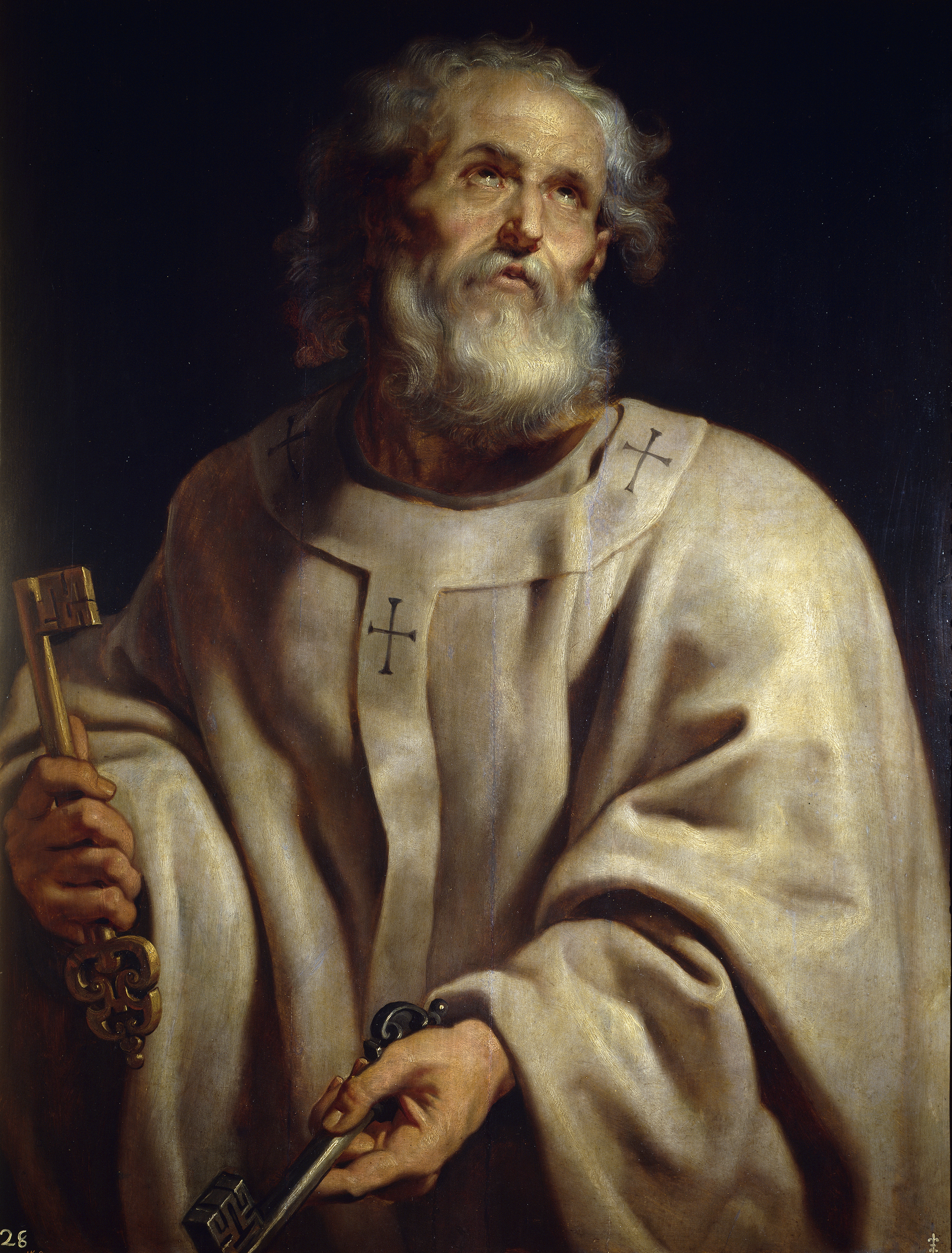
The official List of Popes spans 21 centuries of human history. It begins with St. Peter and ends, obviously, with Francis. In between are 266 men. A few highlights:

St. Peter by Peter Paul Rubens
- From August 1799 - March 1800 there was no Pope. The previous, Pius VI, died in France while imprisoned by Napoleon. There have been 4 other breaks between Popes. Those were for 2 or 3 years and were mainly caused by politics in the church.

Pope-elect Stephen died 3 days after being elected and before his ordination. The Catholic church removed him from the official list of Popes in 1961. Though Stephen's after him counted him in the number after their names.

Benedict IX was Pope 3 times. He was deposed all twice and sold the Papacy to Gregory VI because he wanted to marry. What's amazing is that he became Pope the third time AFTER he sold the seat.

John Paul II has the third longest reign behind Pius IX and St. Peter. He was Pope for 26 years. Pius IX for almost 32. St. Peter is said to have reigned for 34 years.

Study after Velázquez's Portrait of Pope Innocent X 1953
This is just scratching the surface. This leaves out the Borgia Popes and the 41 Anti-Popes. And when Pius IX declared himself Prisoner of the Vatican in 1870 and the title stuck until 1929. And countless other things.

My favorite Pope-related artifact is the series of Pope Innocent X paintings by Francis Bacon. In all, there are 45 variations. Bacon was painting after the famous Velázquez painting of Innocent X.

I've always loved the horror in the paintings. The feeling of a caged soul. A trapped thing. That yawning mouth eating the world.

It is critique without being critique. Bacon famously said that he painted the Pope because he merely sought "an excuse to use these colours, and you can't give ordinary clothes that purple colour without getting into a sort of false fauve manner."

I bring up Popes because I just finished reading Hadrian the Seventh by Frederick Rolfe. The book concerns George Rose, an Englishman who is basically elected Pope on accident after Leo XIII dies in 1903. What follows is one year in the life of the new Pope. He sells off the Vatican jewels and forces Europe to redefine its borders. And then he is assassinated by socialists.

Fr. Rolfe
The book is an interesting look at church politics. There are pages of Papal machinations and in-fighting. There is a scene where Hadrian removes his Papal ring and confronts his Cardinals not as Pope but as George Rose that is one of the most interesting exchanges I've read recently. The compartmentalization that Hadrian/Rose puts himself through to allow himself to BE Pope is amazing.

Frederick Rolfe's book is also mostly a thinly coated wish. He was a failed Catholic priest. He shortened his name to Fr. so people would think he was a friar. The book reads like one long fever dream of a man who felt that the world owed him more. And for that alone, you should go read it. Each page is a screed on what Rolfe thinks the church should be doing vs. what they are doing.

I could discuss Rolfe's at length, but will just add that he dabbled in photography. Of young boys. He was an open homosexual in Victorian England. He died alone and penniless in Venice at the age of 53. And he carried on a long distance affair through love-letters and poems with a priest.

01 August 2012

Lies!

In April of this year I discussed my general dislike of books like the ones Jonah Lehrer is known for. That sort of pop science self-helpish book that takes a subject like creativity and runs out the clock discussing it at length.

And there is nothing really honestly wrong with these books. As I said then, they are entertainment, they get you interested in random acts of science. Radiolab, my favorite podcast, is essentially this format. It leans more on the science end of things though.

As you may have heard, Lehrer was caught lying. Michael C. Moynihan's report appeared in Tablet on Monday. In that article Moynihan details that Lehrer fabricated Bob Dylan quotes in his most recent book, Imagine. This is the book I talked about back in April.

Lehrer was fired/quit his staff writing job at the The New Yorker the same day. In that run-down from the New York Times it is pointed out the Lehrer was just one month ago called out for recycling some of his own writing in New Yorker blog posts. While this isn't a terrible thing, remixing your own work as if it is new is an odd choice for a bestselling author.

All of this conjures shades of James Frey and Stephen Glass.


That is the trailer for Shattered Glass, the film made about Stephen Glass post-scandal. It's an all right movie about an interesting subject. The film is more interesting historically as Hayden Christensen's attempt to un-Star Wars himself.

I guess all of this is a long introduction to me getting to my real questions about these events in journalism. That is:

Where is the line between journalism and literary non-fiction? What sense of truthfulness must an author adhere to with a non-fiction book? Does the lie alter the argument?

Let's get the first one out of the way. The line between journalism and non-fiction is clear for me. Journalism should present the truth. This is why Glass deserved to lose his job and be driven from the industry wholesale. I am not for dry writing, but I am a 'just the facts ma'am' type of guy.

The second question is harder. In a book, that is meant to convey an argument. Meant to present a side of a story. To that effect, I think it's OK for a little fudging to occur. This is where I fall on Frey. He didn't really hurt anyone. His lies were there to make a good story, and people seemed to react to it. I fall in this area on the whole JT LeRoy thing too. I'm not going to go into it here but a middle-aged woman pretended to be a drug-addicted male teenager. Again, I don't care, I like the creativity involved and approve completely.

The final question is the trickiest. I don't know what the false Dylan quotes were or how they fit into the larger picture of Lehrer's book. But this was a lie about a living person. A very famous, very studied, person. While I think a little fudging is fine. This is not. A small lie to add oomph to an argument can be OK in the right instances. Clearly Lehrer has not learned how to pick these out and has been given a public lesson on it.