I have been sending out a lot of work to journals lately.
Call it the unemployment crazies.
I even dusted off an old short story and polished it to a heady glow. The characters were surprised to see me; they stared at the light funneling in from the open Word window and squinted. I asked them how they'd been, they couldn't recall since they don't do anything when the file is closed.
I wrote some new lines for them and edited out the 21 year-old self's mistakes. To the best of my ability.
The least I could do.
Now I have to write an artist's statement. I hate artist's statements. This is what I wrote:
I am a poet. I should get that out of the way first.
Since poetry is a strange gray area between fiction and fact I should probably leave fiction writing to the fiction people.
But that gray area is important to explore. In doing so, I have found myself writing more prose. Prose-like things. Novels, even. And in doing so I’ve found that the two things are not so different. Poetry and fiction, I mean.
Poems are speaking of language, of emotion. They are about the unsaid and the need to be repeated. They are about a walk in the woods and not about that at all. They are ambiguity and concreteness combined. Poems take a word like ‘hello’ and inject it with strange otherworldly meanings.
Fiction does the same thing. But it shows its work. They are language laid bare. Emotion is coming from a person’s mouth there are “ hanging there to show us that someone is feeling this now. You are feeling this now. That walk in the woods is also about other things but there is the actual walk. There are stones you might stub a toe on. When fiction says ‘hello’ it is because there is a ‘goodbye’.
All of this is to say that I find writing to be world building. Poetry is impressionistic; you have to peer closer to grasp it. Fiction is bolder, is Turner, it tells its story and it seems straight forward and it may be straight forward but it spins itself from nothing so it is also magical. Writing is magic. Some of the only magic we have left. I always wanted to be a scientist but am bad at math. Writing lets me boil things in test tubes. It lets me set a world afloat in space to see if the parts work out.
07 January 2013


04 January 2013
Abreaction
 |
| Artists interpretation of visual 'prodrome'. |
I get headaches with startling regularity.
2.
Yesterday, as we were getting ready for bed, I turned to J and mentioned that I hadn't had one in over a week.
Not one since I got back to New Mexico after Christmas.
Not one while away for Christmas.
The regularity of my headaches is something I have come to expect. To understand and hate. I get them, I deal as I can. I always have Advil on hand.
I carried a big bottle of those oddly candy-coated brown pills in my bag everywhere in NY. I have one in my cabinet here in NM.
 Advil was the first over-the-counter ibuprofen. Introduced in the US in 1984. It was available by prescription from 1974 onwards. Before 1974 it was only available in the UK and Europe. It was discovered by the research wing of Boots in the early 1960s.
3.
Boots was founded in 1849 by John Boot in Nottingham.
In June 2012 Boots announced the purchase of a 45% stake in the company by Walgreens. The plan is to introduce Boots to the US and Walgreens to the UK and China.
The two companies have signed a deal to merge within 3 years. The deal will cost Walgreens $16bn.
Walgreens was founded in 1901 by Charles R. Walgreen, Sr. in Chicago.
4.
The halo, or prodrome, before onset is a well-documented effect. Everyone is a little different. I have strange visual artifacts and a pressure that can only be described as 'skull heaviness'. It is like I can feel the weight of the bone around my brain.
My brain weighs about 3 lbs. with a volume around 1260 cm3. The skull on average weighs about 2.2 lbs.
Science has no answers for what 'causes' migraines. Dodick and Gargus call them 'increased excitability of the cerebral cortex and abnormal control of pain neurons in the trigeminal nucleus of the brainstem.' in their 2008 Scientific American article Why Migraines Strike.
Basically it is your brain loosing control of itself.
Control is the problem.
Migraines make it so I can't go outside, can't read, can't eat. They turn me into a person who sleeps all day. The make me pop pills like candy.
Using the verb 'strike' is appropriate. Migraines feel like they have lives of their own. Depending on the person they will arrive and depart in different ways. I know about a day before when I'm going to get one. After, it feels as if there's a soft spot on the left side of my head.
A fading bruise, the moisture after a kiss.
5.
 |
| There is a Walgreens in the background of this photo from VJ Day. |
6.
From the OED:
abreaction, n.
Pronunciation: Brit. /ˌabrɪˈakʃn/ , U.S. /ˌæbriˈækʃ(ə)n/
Psychiatry.
Discharge of the emotional energy associated with a psychic trauma that has been forgotten or repressed; the process of bringing such a trauma back to consciousness, esp. as a psychotherapeutic technique; an instance of this.
7.
Discharge of the emotional energy associated with a psychic trauma that has been forgotten or repressed; the process of bringing such a trauma back to consciousness, esp. as a psychotherapeutic technique; an instance of this.
7.
I awoke with a migraine.
I had none of the usual clues to its arrival. No visual fuckery. No weight on my head.
I felt light-headed yesterday. Felt under the weather.
I thought I was getting the flu.
The last two months have been stressful. A move, unemployment, etc. Perhaps this is just all of that catching up. Filling out the empty spaces where my mind was occupied with a job, with New York's never-endingness.
Perhaps it was just a migraine.
02 January 2013
Poem-A-Day Reprint : New Year's
A reprint from New Year's Eve 2010
Hope
is something that I measure
in milliliters I pour it over my head in the shower
in bath houses
I stand in steam rooms
and run it over the coals
Hope is a flower in a railyard
thriving
I'm trying to have more
Trying to collect it in jars
Some kind of insect emotion
that I can hoard
Hope
is the new year coming up and opening
its arms I am trying
31 December 2012
Lost at Sea
.jpg) |
| USS Orizaba leaving NY for France during WWI 1918 |
From 1921-1939 she sailed the New York-Cuba-Mexico route for the Ward Line.

In 1931 Hart Crane went to Mexico on a Guggenheim Fellowship. He would remain there until April 1932, when her would take the Orizaba with the intention of going back to New York.
Hart Crane is a distinct New York poet. He is hailed and derided as the ultimate in Modernist poetry.
He lived in Brooklyn Heights in the late 1920s with his boyfriend. The view of the Brooklyn Bridge filled him with hope and awe. In response, he began to write a rebuttal to T. S. Eliot's The Wasteland, what would become The Bridge. A view that I have been inspired by many times. Will always inspire.
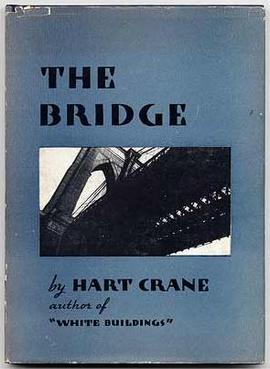 That poem, transcendent and strange, was received poorly when it was published in 1930 by Black Sun Press. Even today its place in our American 'canon' is often questioned.
The poem is about progress. A new, bright, American future. The 'great war' was over and America had come out strong and vital. The bridge was the ultimate symbol of that achievement. The growing pains were through, America was a grown-up country.
In 2006 Hart Crane: Complete Poems and Selected Letters was published. Writing in The New Yorker, Adam Kirsch called The Bridge 'an impressive failure. . .[that] varies wildly in quality, containing some of Crane’s best writing and some of his worst.'
I can't say I disagree. While I find the poem beautiful, it definitely leaves me with a sense of open-endedness. A sense that it was never fully realized. Sections of it crumble in your hands in a way Eliot never does. Perhaps it mirrors the fragility of its time. The 1930s were hardly the gold-coated promised land that people thought they would be.
 It uplifts, but it feels ephemeral.
Whitman's Crossing Brooklyn Ferry does a better job capturing a future bright with promise. I suspect that Crane's is a personal triumph. He was living with his lover, he woke to the bridge. It was a far cry from his Christian Scientist upbringing in Ohio. It was glorious. Understandably.
That it doesn't quite connect into a metaphor for the future America makes sense. There was another war on the horizon. A Great Depression.
And like Mishima, and countless other people around the world, homosexuality was also a dark spot. The reveling is magnificent, but the realities of the world find a way to enter back in.
At around noon on 27 April 1932, while the Orizaba was 275 miles north of Havana and 10 miles off the Florida coast -
This is familiar territory. The night before Hart Crane had hit on a crewman of the ship. Had been attacked. Had been humiliated. Crane, in pajamas and an overcoat, shows up on the rear deck. He was drunk. Had been drunk for years. He climbed the railing and maybe even said goodbye, then fell into the cold water. For two hours lifeboats searched. His body was never found.
Like Mishima, Crane had a clear love of aesthetic. He was a romantic. He was a visionary. He claimed that he saw the future. That it was bright. Like Mishima, he took a female lover, Peggy Cowley, who was the inspiration for The Broken Tower.
The two are vastly different. They are not parallels. But the closeted world of gay men in the history of the world is full of similar tales. Of elaborate 'masks' of the failed pick-up. Of the beatings and then the suicides.
The Brazilian navy took over the boat that was called the Orizaba in 1945, renaming her Duque de Caxis. The boat was scrapped in 1963.
A counterpoint:
In 1934 Katherine Hepburn took a trip to Mérida, Yucatán. Once there she filed for divorce from her husband of 6 years, Ludlow Ogden Smith. She then vacationed in Havana and went home.
I don't add this as a comment on heterosexual marriages. How they are easy to enter/exit. I add it as an example of the intersections of lives/loves and how these dramas play out on similar stages.

28 December 2012
Confessions of a Mask
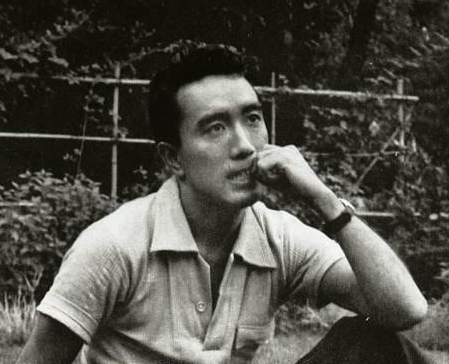
Mishima was born in 1925 and died in 1970, aged 45.
He was committed to bushido, the samurai code, and fancied himself a modern vision of that tradition. His writing is full of this 'chivalry' code, as well as death and sex.
 Due to the following of the code, Mishima was incredibly fit. Which is putting it mildly.
He is remembered for his writing, his obsession with anachronistic concepts of manhood, and his death. He and four other men staged a coup attempt on November 25, 1970. After locking themselves in a government office Mishima delivered a speech to the army below. They mocked him. He went back into the room and committed seppuku, ritual suicide.
The obsession with death played out in his books. Specifically, Confessions of a Mask (1949).
In that book we follow a young boy who feels 'different' from childhood to his early 20s. The book is told as interior monologue. We are given the boys thoughts on life and his friends and family.
 Mostly we are told that he loves suffering. The closer to being noble, or pure, the better. He also talks at length of masturbation, his 'habit'. And that he seems to only find working class men attractive. An early scene has him watching a man taking away bails of human waste. The boy becomes obsessed with the man's pants and white shirt. With the stink of work. Of sweaty bodies.
Later the boy finds a painting of Saint Sebastian by Guido Reni and basically falls in love with the image.
Mishima's book is called a novel. It is called an autobiographical novel. But I'm pretty sure it is as close to memoir as you can get. He was known to frequent gay bars, his wife was aware of it. His family sued to stop Jiro Fukushima publishing letters between the two authors of their affair. And there's this photo, part of a set, of Mishima taken before the coup attempt.

Rumors swirl that the coup was an elaborate performance on Mishima's part. That it had been planned for years as a sort of perfect, beautiful, tragic finale. All through Confessions the character discusses his eventual death. Always at a young age, always dramatic. When it doesn't come, he starts to shut off his emotions. To form the 'mask' of the title.
After a failed visit to a brothel he finds himself at a party staring at the white thigh of a woman:
Going from the book a portrait rises of a man who created his own cage. Afraid to exist, and concerned with 'correctness' to a degree that he beat bordered on obsessive he became a caricature of a man. Physically fit, adhering to a romantic ideal that never existed, and dying tragically.
The closet as performance. Society as stage.
26 December 2012
Boxing
Boxing
Here is a room
Taken up
bit by board
Piled in the back yard
Behind a chain
a lock a broken fence
Until the room
Opens
And the lights come on
Here is a room
Taken up
bit by board
Piled in the back yard
Behind a chain
a lock a broken fence
Until the room
Opens
And the lights come on
24 December 2012
Christmas Wish 2012
Christmas Wish 2012
I want a talking dog
That said
I know that this is impossible that
the universe has yet to
turn that thing out I will settle
for a run-of-the-mill hound
to walk in the woods
to fetch
to roll over etc.
But
I will not bend on wanting a cat
who can make an omelette
Subscribe to:
Posts (Atom)