It is the age of the octopus -
of long form writing -
The age of golden fingers telling the internet their opinions
and then -
When the oceans rise will the AI still be given feminine names
and the faces of dead children?
In Santa Fe water takes over for the sand
There is an impulse to deny this is happening - that
the leverage of thumbs is just to damn great -
Suckers are not the grooves in flesh
they cannot feel warmth -
They splat on glass - they are easy to baseball bat into pulp
Perhaps it is best to only think-piece on this - we must turn to 4chan for help
the worry on the lips of the USB port cannot possibly convey
the concern of mountains becoming hills
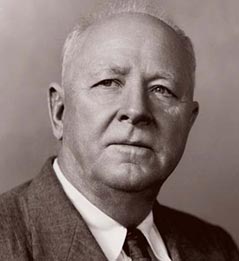
In 1933 at the height of the Dust Bowl the US government decided to put their faith in a man named Hugh Bennett. They invented the Soil Conservation Service (now Natural Resources Conservation Service) and made Bennett the director. His view was that man was causing massive erosion, that it was one of the main environmental problems facing the planet.
Hugh Hammond Bennett
Bennett was right about erosion and the Dust Bowl. By the end of the 1930s around 75% of the topsoil in 5 states (Texas, Oklahoma, Colorado, New Mexico, and Kansas) had simply blown away. 100,000,000 acres were affected
In May of 1934 a large dust storm took soil from this area and dropped it on Chicago, New York, Boston, and Washington, D.C. Dust had to be swept from Congressional offices. 12 million pounds of soil fell on Chicago and that winter red snow fell in parts of New England.
The problem was bad enough that by 1935 the Resettlement Administration was started. The main goal of the RA was to take people from failing cities and rural areas and place them in government built 'greenbelt' communities. The idea was to 'jump start' life for those most ruined by the Depression.
Lorentz' other film The River is also worth a look. It focuses on the Mississippi River and the environmental destruction from over farming and building on its banks.
I've been reading Timothy Egan's great book The Worst Hard Time. Published in 2006, the book formed the basis for Ken Burns recent PBS documentary The Dust Bowl.
Egan's book focuses on a few families and follows them from settlement, through the wet prosperous year and then into the 1930s and the great environmental catastrophe. One of his main 'characters' is Bam White, a half Cherokee/Apache ranch hand who tries his hand at farming. He is the featured plow man in The Plow That Broke the Plains.
The Ogallala Aquifer
Bennett implemented his ideas late in the 30s. 11.3 million acres were bought by the government in an attempt to heal the broken plains. Though there is much land still barren, three national grasslands dot the area, the largest is Comanche National Grassland at 600,000 acres.
The people that do still live in the area have tapped the Ogallala Aquifer. It provides 30% of the irrigation in the entire US. 82% of the people who live in the area of the aquifer rely on it for their drinking water. 1.1 million acre-feet a day are drained. This is eight times as fast as the Ogallala refills. Current projections give the aquifer 100 years until it goes dry.
The overwhelming lesson from the film and the book and the 70 years between the two is that we have not learned a thing. We have pushed the land to the point of no return, healed a small portion of it, and then have redug, replanted, and repushed it back to the brink once again. Now we're taking the underground water with us.
Living in the southwest it is hard not to be frightened of a lack of water. Of a new Dust Bowl. Animals, families, towns died from the dust. We invented new meteorology around the giant dust blizzards. Doctors had to come up with new terms for the dust pneumonia that some estimates say killed 7000 people.

Dorothea Lange, Migrant Mother 1936
2.5 million homeless. Many of whom were prodded to buy the land in the first place by low prices and promise of 'wheat wealth'. The US government pushed this land as the last 'frontier' it pushed the wheat producers in war time to plow the land. Then the government watched as it blew across the White House lawn.
The Depression and Dust Bowl are having a bit of a resurgence. It is the economic times we live in, the environmental crisis we feel lies just over the horizon.
Read Egan's book. Watch Burns' TV show. Take a look at Dorothea Lange's RA photos. (Marisa Silver has a novel called Mary Coin coming out in March based on Lange's incredibly famous Migrant Mother).
If there is a real lesson to learn, aside from how awe-inspiring the fragility of all of this is, the lesson should be this: Be aware.