Couplet #12
Poetry -
- the interminable "I"
Showing posts with label on poetry. Show all posts
Showing posts with label on poetry. Show all posts
06 September 2016


23 February 2015
Lying-ass Song
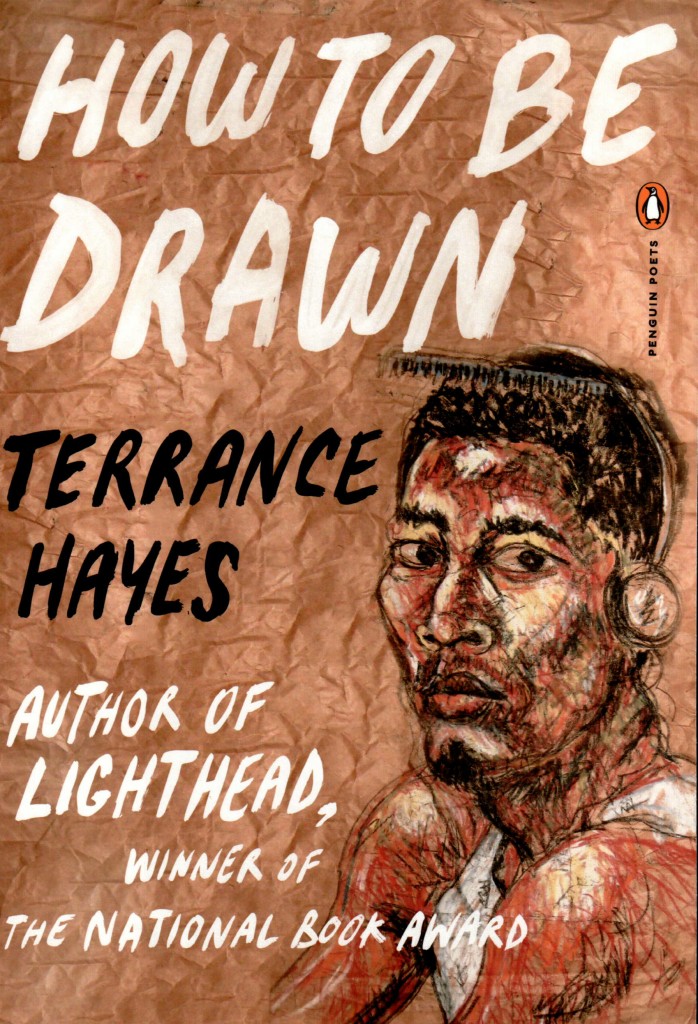
...Some things in this worldThat is how Terrance Hayes new book, How to Be Drawn*, ends. The lines seem to both soothe and to warn. They are almost a hex.
Do not depend on speech to be felt.
There is a listlessness in the end of winter. It's like the final days of illness when you are feeling better, have an appetite, even energy. But you are still hacking up phlegm and oozing from your nose. You may go back to work/school/etc. but you will be coughing like death for a few more days.
You might lose your voice.
How does one get back their lost voice?
Hook up a battery to it and jump?
Mid-semester and I am not writing. I'm editing, which is great, let's not get hysterical about this. But I am not producing new. It is easy to blame this on teaching. That I am spending a lot of brain-space on being creative in a different way.
The reality is that I get tired too easily.
I have very specific spaces that I am able to get creative work done in.
Mental and physical.
I need to be rested, but not too rested. Awake, but not over energized that I can't sit. Distracted by my surroundings just enough to go to that imagination place to make weird connections, but not too distracted that I start transcribing the lyrics tot he song playing or start live tweeting the conversations at the next table.
I need to have a jolt of creation, but not a jolt of someone else's energy.
If this all sounds like excuses. Well. It feels that way to me too. But these are the rules that my brain has given for the 'work' to commence.
Lately. It just hasn't.
That isn't to say I am out of ideas. I have mapped out a series of linked short stories. I've reworked bits of the novel-in-never-ending-progress. I organized a chapbook and printed a bunch of poems to try and pin together a manuscript. I even wrote a new poem the other day.
But it doesn't FEEL. And maybe this is a limit of that word. Or of the word 'work' or 'creativity' or or or or or.
I keep waiting to feel like I've turned a corner, or the ball is rolling, or something akin to that absolutely not able to be defined thing.
Maybe I'm waiting to be an 'adult'. Or a 'professional'. Or.
The Hayes quote above ends with this:
Remember too that the eyes are not flesh,
That crisis is initiated by the absence of witness,
That Orpheus, in time, became nothing
But a lying-ass song
Sung for the woman he failed.
It isn't that I am waiting.
It is that I am not sure I ever learned how to feel it when it gets here.
* How to Be Drawn is out March 31 2015 from Penguin
08 March 2013
Blue Crayola
This is the oldest poem that I have saved on my computer. It is a poem from September 2000. There are poems with older roots floating around, but this one has the oldest modification date.
I can't tell you what the original inspiration was, it is lost to me. I think it had to do with that time of year when twilight grows long and the sky takes on that amazing blue glow the last few hours before full dark.
What Joan Didion calls the blue hours. It happens in late May and early September. The start and finish of summer. The sky announcing the growing season with a trumpet blast.
Here is the poem. It's just called Blue Crayola:
 |
| 4 generations of logos on Prussian (now Midnight) blue |
Water wrapped in wood
Dipped in cornflowerAnd cased in sugar
Crisp as the sky, yet
Blurred as the oceans
Atlantis in a paper cup
Neptune’s pen of pens
The melting point of wax
Becomes indigo crushed
A missile from the Blue Man Group
Chew-toy of the young and famous
And not-so-famous
Implement of famous nights and devastating floods
A place of worship for faeries
One hundred years old
A Tim Burton movie’s inspiration
Blue Crayola,
September 2000
I have two versions saved. One with the blue words, and one without. I like the idea behind the coloring of the words. That some of them clearly connect to 'blue' and some seem as far from it as can be. Like 'wax' and 'worship'. In my head I can invent new connections for the color and the word.
I cannot be sure if they are the same as the ones I had 13 years ago.
The forgetting of thought process is not a problem for me. Not scary. But it is interesting how ephemeral that thought can be. When I wrote this I am sure it seemed to be important. Imperative, even. I bet I turned this in to workshop. I bet people said nice things.
What would I write today if I was meditating on a blue crayon? Which is what this seems to be ultimately. A thought on a childhood object written at the end of childhood. I think it would be similar, touch on subjects like these. Though Neptune and the sea feel more green to me now. And I think Blue Man Group is too obvious, but the missile is good. I don't like the obtuse references to actual blue things. I feel like it relies too heavily on that. I want it to come sideways. From non-blue parts of the universe.
September is definitely blue. I will have to revisit this.
In the meantime go read Thirty-Six Shades of Prussian Blue by Joshua Cohen.
18 February 2013
Top 40 : Hider Roser

for I have no idea
I have an uneasy truce with surrealist poetry. My interest in what's going on on the page dwindles as the language looses meaning.
But.
Surrealism manages to say things literal writing cannot.
Pretty soon you have a loft
and people are getting to know your work
rearranging the letters in horse rider
you get hider roser, which means something
you will never understand
with only a few minutes left
one end of the hose going into your head and the other
going don't know where
There is an obvious play of growing fame and what it is worth at play in Mirov's second book. Each poem has a sense of sadness in it. Oddly buried in with the shifting meaning of the language.
That sadness has always been the key that lets me enter Mirov's work.
You want to write about a horse
but you have written hose.
Think of meat.
Meat thinking of jogging.
Meat going out on a date to see the water.
The image is hilarious and magical. Like the best of Wallace Stevens or even Rimbaud this book hums with wit. It's also filled with doubt. The book ends with Ribbon:
I've spent a long time
with these words in my head
and now here they are
In the final stanza Mirov addresses that key I was talking about. It is apparently also his:
If you're still listening,
put this somewhere safe.
Throw away the key.
I think the key is more than I ave discussed. Mirov is speaking a secret language. One to himself. He is making a journal. It is clearly meant to reveal all but in coded lushness. It is confession as unconfession.
15 February 2013
Top 40 : To Keep Love Blurry

The Craig Morgan Teicher that is portrayed in To Keep Love Blurry is filled with doubt, remorse, and worry. He has lost his job. His son is disabled, Teicher worries endlessly for his future.
who will take care of him when Brenda and I are dead?
He discusses his arguments with his wife Brenda Shaughnessy.
...How
do I learn to love Brenda right, and learn
to get her to love me how I want to be loved?
He writes in his parent's voices only to have them talk about his flaws and how they are his own psyche. It is confession without the histrionics.
This is you talking to you - I'm dead.
He brings in other poets to quote them then discuss how is not like them. He worries over his fame. What his writing will be after it is over.
A very minor Robert Lowell, with a dash of James Tate
When he isn't ruminating on these things he's talking about death. The book ends with these two stanzas:
Is there truly time for so many tragedies?
Death has earned the key to every city. For who else
tends to all of the sick? Who else takes
in the old? Who else wants us all?
Not even our mothers. In fact,
only death always keeps its promise.
What rises from this book is a more honest confession. An actual look in the mirror, warts and all. At times it gets repetitive, the self-doubt borders on self-obsession. And the continued self-deprecating tone begins to get tiring in longer poems. I've always been suspicious of self-deprecation. It serves only as fishing for compliments. For someone to come back with a 'no, that isn't true' statement.
Teicher's book is great. Coldfront put it at 6 on their year-end list. I agree that this book is great. Teicher is alone inside a book that he created but I think he wants to be even though he says he doesn't.
11 February 2013
Top 40 : Bewilderment
Continuing with a look at the Coldfront Top 40. At number 7 is David Ferry's Bewiderment, which won the National Book Award. I wrote about it in December. Below is a revised version of that post.
* * *
 A friend of mine had recently read David Ferry's Bewilderment. She recommended it, with a caveat:
Take it as a whole work.
At the time I wasn't sure what to make of this. The book is long, is full of translations of classical poets; Virgil, Rilke, Cavafy, and Horace all make appearances. The connecting theme is one of passing time, old age. The arcs within the sections feel like meditations. The translation acting as bookend and informative guide.
Ferry is 88. He is clearly making a last go round with this world. An attempt to connect the final dots. To find the grand theme in the narrative, etc...
Aunt Nellie's picture was in the paper once,
Triumphantly posing with a large bottle,
Black widow spiders inside looking out,
As conscious as fireflies of their situation.
 Are we conscious of our situation? I write about decay in my own poetry. My MFA dissertation was based around the idea of entropy in art. I am keenly aware of death, but am I conscious of being in the jar?
The fact is that from the moment we are born we begin to fall apart. Cell walls start to break down, chemicals begin their depletion, etc. etc. etc.
Like A. R. Ammons, Ferry has a keen ability to make us OK with death. To be almost friendly with it. Ammons did this in Garbage, his book length mediation on the end of his life. Here, Ferry does the same. Ammons chose to use the metaphor of a garbage dump for the detritus of life. Ferry gives us Horace.
Think of the pile of language across time. It is massive, unforgiving. Ferry is pointing out that his words are merely newer versions of older ones. The translations bleed into his poems and his poems inform the depth of the old. And they all speak with the same voice, his. As do we all.
Eventually.
08 February 2013
Top 40 : Meme

The meme is hardly a 21st century phenomena, though the word originates with Richard Dawkins in his 1976 book The Selfish Gene. At its core, a meme is an idea that spreads until it is ubiquitous. They are useful in their carrying of cultural knowledge, norms, even news.
Meme is a shortening of the Greek mimeme - 'something imitated'. Good examples of old memes are teaching games for learning to tie your shoes, or Ring Around the Rosie. Dawkins intended the word to describe evolutionary principles in the spreading of ideas. Today we use it to talk about the weird repetitive jokes on the internet.

And while they are frivolous and silly, they still connect and convey information across great distances. They are still sort of doing their original job. It's just that they are now doing it through the many ways Michelle Williams has been dissed over the years. Are we teaching each other how to survive the plague? No. But we are disseminating cultural baggage.
Into this discussion steps Susan Wheeler's book, Meme. Published by University of Iowa Press in 2012, Coldfront placed it at 16 on their year end Top 40.
The book takes stock phrases, sayings, jokes, and places them along bits of conversations taken out of context. Wheeler uses these selections of dialogue to craft strange elegies. To her failed marriage, to her recently dead mother, to herself.
The poems read like the leftovers from these relationships. The strange magnetic echoes. Like remembering a smell. Or touching the surface of something and having a flash of memory. It is broken, and haunting.
The poems are named Canasta, Turkey in the Straw, Jeehosaphat. Here is Ten Conniptions:
Hold your horses.
If you don't knock it off now there will be no cake for you. You're
skating on thin ice.
That's it. That's the last straw. You get down off your high horse,
young lady, and shape up or ship out.
Can I pack your bags?
Yes, divided blessings: banishment, ruin.
Dragging its lines, the trawler
buckles under.
At times the language gets difficult to take in. The endless barrage of 'momisms' and pat phrases begins to make your brain glaze over. The effect is something akin to a scolding from a parent. But a strange one; one that you wanted to happen.

I liked the book, but mostly found the poems to be forgettable. This is the problem with memes in general. The ephemera quality of them. We remember things like 'pot calling the kettle black' but they sit idly in the back of our mind until we are reminded of them.
Wheeler's book is interesting. Her use of these well known phrases forces us to reconsider them. To rethink the language of them. In the context of a poem like Ten Conniptions these phrases begin to sound like a collective childhood. I'm not sure they become more than remembrances though.
Wheeler was a finalist for a National Book Award. I agree with Coldfront's John Deming, 'its sub-current of autobiography–the poet’s and everybody’s–alongside a barrage of sometimes-recognizable phrases will leave you with a ghost in the room.' I just don't know that the ghost wasn't already present.
06 February 2013
Top 40 : The Glimmering Room

'Images of destruction, death and illness dominate the pages of Cruz’s collection. Some poems also hint at sexual abuses...Cruz’s is a world of abuse, drugs, sex, poverty and desperation. Somehow, though, the poems yield beauty...'
Wilson then quotes Notes on the Disaster in full:
Tore the plastic tubes from my arms.
I still have the scars and I walked
Right out of that place. I say
If I’m going down, then I’ll do
The killing -
I still have the scars and I walked
Right out of that place. I say
If I’m going down, then I’ll do
The killing -
To say Cruz' book is brutal is the worst kind of understatement. Language fails at describing the experience of Cruz' world. There is implied sexual harassment. Drug use. Death. The people talked about seem to be teenagers. Young. They live in a strange crack house like world. You are never sure where it is, but it is everywhere.
Last week I posted her poem Breaking Glass. I did this mainly for the last three and a half lines:
That warm slop of honey,
Seeping. No way to stop it
and its gorgeous hurricane of bees.
That sound of bees. I can hear it throughout Cruz' book. This constant menacing hum. One that probably will not yield honey, though it is implied it may.
The structure of Glimmering Room is one of repeated Strange Gospels. The gospels tell the story of a narrator and her friend Billy. There are 11-year old prostitutes. Billy eventually dies, though she comes back a few poems later.
Wilson calls the poems a sort of waste land. She isn't talking the T.S. kind. She's talking the Detroit kind. The vacant falling apart America kind. The not taking care of our shit kind.
The book opens with this quote from The Gospel of Thomas:
If you bring forth what is within you, what is within you will save you. If you do not bring forth what is within you, what is within you will destroy you.
It is clear that Cruz is clearing her plate. Metaphorically bringing what is within her. Purging of these tales, mentioning these things, makes them less poisonous. Begins the moment of discussion on them, thinking on them.
It is horrifying and it is gorgeous. One of the most vicious books of poetry I have ever read.
I would have put Cruz much higher up on the list.
04 February 2013
Other People's Poems
from Fable of the Last Untouched Town
4.
A storm raged for a week and our town was erased
by hills of snow.
Afar, our one story chambered apartments
look like concrete harmonicas. It's easy for snow to swallow us.
But after the storm, a gigantic glacier appeared inside
the king's most cherished open-air stadium.
It took up the whole arena.
Our leader launched a campaign.
Defunct factories suddenly produced heat lamps
and they strung a ceiling of scalding tubed bulbs over the stadium,
but the glacier only glistened.
So he demanded legions of laborers to come
chip away at this offensive glacier.
I was drafted to help.
When I arrived, I was awed, I was so awed, I began to cry
but when someone questioned my tears,
I said I was crying for our king and cursed
the imperialist-plotted ice.
The sheer sapphire cliffstone towered so high,
the whole ocean seemed frozen inside it.
Under its shellacked panes of ice were marblings of color
I'd long forgotten: tangerine, topaz,
canary and rose.
Like fluorescing cuttlefish,
the colors pulsed, swirled and bloomed
into contracting rings. The ice breathed.
We slowly chipped away with our picks.
As soon as we gathered a pile,
the wind burst in and scattered the powdery snow far
into the air like spores.
One laborer accidentally swallowed ice
and it caused him to hallucinate, blither in another language.
He was immediately exterminated.
We were forced to wear masks.
One day, I decided to steal some.
I pocketed one grain.
The snow glowed bluely in my hovel.
My little lamp.
Then one night I don't know why I swallowed it.
And this is what I saw.
- Cathy Park Hong
01 February 2013
Top 40 : Engine Empire
 'Also, the new observatory's been ransacked for its myths,
the telescope shattered to a million bifocals,'
Year end lists are an odd sort of summation. A way to mark off the end of a cycle. A start of a new one. They are a lens to judge the past.
Coldfront has put together a list of their Top 40 books of poetry for 2012. I've read 5 of them. At number one is Engine Empire by Cathy Park Hong.
Hong's book is a new Waste Land. A sort of attempt to explain the present with the past. Specifically the past of humanities need for overextending.
The book is divided into three sections, each detailing a part of 'boomtown' culture. The first seemingly set in the American west. The second in a fictional town in China. The final section is set in the future, in a land ruled by interconnectedness.
I cannot hep but think about the American Dust Bowl. I have just come off of reading two books on the subject. The idea that man could change the world to fit his ideals, that the world would then turn on man. It seems to be having a bit of a moment.
'...we
don't need our heirloom
mouths.'
Is it because the last of that generation, the one that saw two world wars, a depression, a Dust Bowl, a Holocaust, is dying off? That this moment of time is passing from immediacy into history into a thing in a book?
We are afraid of our future. I am. I am sure you are too.
We are at an impasse on nuclear arms, religion, science, economy, labor. We cannot see the next thing beyond the current one.
 |
| Holocaust Memorial, Berlin |
'The voice of Gregory Peck booms: Honey Suckle.'
Recently there has been a string of people posting photos of themselves posing seductively at the Holocaust Memorial in Berlin. Marc Adelman has been collecting them and showing them.
His work centers around photos gay men have been posting on the dating/sex finding app Grindr.
'Xiao, bring me my napkin,
my thumb is smudged with the horizon.'
Many questions arise. Why take photos there? Why use that photo on what is essentially a sex finding app?
Is this disrespectful? Even anti-Semitic?
I think this is an example of the 'tourist effect'. When people snap narcissistic photos of themselves seeing things of 'import'. In front of the World Trade Center work site. At the side of the Grand Canyon. These are the same impulse. To say 'I was there. I saw this thing.'
In seeing it I have proven myself to be a part of a larger collection of humanity. Or. 'This photo of me looks good, don't you want to fuck me?'
We forget everything easily.
At one point in her book, Hong reveals an outdoor amphitheatre that has filled with a glacier. The king has hired her and others to chip away at it. To reclaim his building.
Once something has been lost to time, can it be reclaimed?
I don't think the Holocaust has been lost to time, yet. But there is that question of when. At what point does something pass. Whether it turns to myth, legend, or just vanishes. At what point does it become a thing in a book waiting to turn to dust?
At what point do we?
These are the questions Hong raises. She is concerned not with where we are going, but what we did to get there. What we forgot along the way. And who we lost.
'Then one night I don't know why I swallowed it.
And this is what I saw.'
30 January 2013
Inspiration : Cheapen
Cheapen 9/29/09
Pennies tarnish - turn green the
milky waters of the bay
I have always loved the look of old things. The dark spots that form on silver. The way wood softens around the edges then the grain separates before finally crumbling.
Copper tarnish is beautiful, green-blue, it looks like stain painted onto the surface.
There are barnacles that look like Lincoln
on hulls of schooners
The idea that a barnacle could have the face of Lincoln is ridiculous. It is also amazing. This is the idea of finding Jesus on toast. Satan in the smoke of the World Trade Center.
It is finding the shapes of things in clouds.
But I mean it. I mean that somehow a penny was dropped into a spawning of these little creatures and they took the shape of the Emancipator himself.
Look at barnacles. They are halfway to having faces. They are eyes without heads. Or mouths, they are venus flytraps. They are Audrey II's.
His nose smells all seven seas and in
Times Square they have a bit of curtain
The smell of the ocean is particularly strong on the east coast. It is different then the Pacific. It smells like brine. Like fish. It smells darker, somehow colder.
From the Ford theater - history
under glass - untouchable
This is true. The fragment of curtain was on display in 2009.
Eventually all faces are left to pictures only
just masks
Old photographs are amazing. The faces staring up at you through time. Their eyes still holding whatever thoughts they were having as the shutter snapped shut.
In most antique stores you can find bins of discarded photos, postcards with cursive writing on them. All for sale for under a dollar. Memories for less than food.
Of paper
there is a thickness to blood lacking in paper
Blood is very hard to clean. It has a strange thickness to it. It smears rather than absorbs.
That copper taste and the red that seals brown
that softens in water
Pennies tarnish - turn green the
milky waters of the bay
I have always loved the look of old things. The dark spots that form on silver. The way wood softens around the edges then the grain separates before finally crumbling.
Copper tarnish is beautiful, green-blue, it looks like stain painted onto the surface.
 |
| Creepy. |
on hulls of schooners
The idea that a barnacle could have the face of Lincoln is ridiculous. It is also amazing. This is the idea of finding Jesus on toast. Satan in the smoke of the World Trade Center.
It is finding the shapes of things in clouds.
But I mean it. I mean that somehow a penny was dropped into a spawning of these little creatures and they took the shape of the Emancipator himself.
Look at barnacles. They are halfway to having faces. They are eyes without heads. Or mouths, they are venus flytraps. They are Audrey II's.
 |
| Ford Theatre curtain fragment. |
Times Square they have a bit of curtain
The smell of the ocean is particularly strong on the east coast. It is different then the Pacific. It smells like brine. Like fish. It smells darker, somehow colder.
From the Ford theater - history
under glass - untouchable
This is true. The fragment of curtain was on display in 2009.
Eventually all faces are left to pictures only
just masks
Old photographs are amazing. The faces staring up at you through time. Their eyes still holding whatever thoughts they were having as the shutter snapped shut.
In most antique stores you can find bins of discarded photos, postcards with cursive writing on them. All for sale for under a dollar. Memories for less than food.
Of paper
there is a thickness to blood lacking in paper
Blood is very hard to clean. It has a strange thickness to it. It smears rather than absorbs.
That copper taste and the red that seals brown
that softens in water
25 January 2013
R.I.P.
Over at The Washington Post, Alexandra Petri asks 'Is poetry dead?'
She decides it is.
And she bases this on the fact that there is no new Waste Land or Howl. She doesn't seem to know a single poet around after the 50s.
She starts her article describing Richard Blanco's inaugural poem. Then she says that Richard Blanco's career is worth nothing:
He has overcome numerous obstacles, struggled against opposition both internal and external — in order to excel in poetry, a field that may very well be obsolete.
And she uses this phrase as a repeating line:
She decides it is.
And she bases this on the fact that there is no new Waste Land or Howl. She doesn't seem to know a single poet around after the 50s.
She starts her article describing Richard Blanco's inaugural poem. Then she says that Richard Blanco's career is worth nothing:
He has overcome numerous obstacles, struggled against opposition both internal and external — in order to excel in poetry, a field that may very well be obsolete.
And she uses this phrase as a repeating line:
Or is this too harsh?
The article is online journalism at its worst. Unresearched, generalizing, and sensationalist. Petri doesn't even bother to back her argument with examples, instead she calls modern writers 'new agey'. Poetry 'cannot change anything' it 'lacks teeth'. She makes jokes about the 'five' people who care about poetry and how readings are only full of students looking for credit.
I'm not sure what 'new agey' poems she's reading. She doesn't cite a single poem for her premise. When she finally does quote poetry it is a mis-quote of William Carlos Williams.
Over at Coldfront, John Deming makes a balanced and wonderful argument against Petri's premise. He manages to not call Petri what she is, an ass with a national voice.
Or is that too harsh?
*UPDATE*
Petri responds to the response.
Also a response to the original article from the Poetry Foundation.
*UPDATE*
Petri responds to the response.
Also a response to the original article from the Poetry Foundation.
09 January 2013
Inspiration : Black
Black 9/28/09
My heart is a breathing organ with an unblinking eye
It is meant to protect against the evil eye.
On my back I have a large tattoo of the sun with an eye in the center. You could view it in a similar light as the hamsa. I always thought of it as an eye in the back of my head. A look out.
When I was 21 I was deeply romantic. The thought that some ink lines buried in a few layers of skin could protect me form history. From the future...
My heart is a breathing organ with an unblinking eye
 |
| Art by JimmyBlaze |
The hamsa is a hand-shaped motif that originates in the middle east. The exact origins are unknown, but pre-date Islam and Christianity. In Islam it is known as the Hand of Fatima, after Muhammad's daughter.
It is meant to protect against the evil eye.
The idea that a look could bring harm.
It has become popular in Israel and appears on jewelry and keepsakes. It is considered a good luck charm. I have one next to my front door. I am not Jewish, Muslim, or superstitious. It was a gift from a good friend. It traveled from Israel with her in 2008.
It has become popular in Israel and appears on jewelry and keepsakes. It is considered a good luck charm. I have one next to my front door. I am not Jewish, Muslim, or superstitious. It was a gift from a good friend. It traveled from Israel with her in 2008.
 |
| My hamsa |
When I was 21 I was deeply romantic. The thought that some ink lines buried in a few layers of skin could protect me form history. From the future...
My heart is a hearing organ - a kneecap breaking on a tire iron
That is the sound a healthy heart makes.
The University of Washington has a handy guide with audio of various heart problems. The most common being a murmur. Murmurs result from an out of the ordinary blood flow. They create what sounds like an echo of the heart beat, or a woosh sound.
Most cannot be heard without the aide of a stethoscope. Laying your head onto someones chest as they sleep will not help you find abnormal heart sounds. It will allow you to feel their warmth and count the rhythms of their breaths.
a chamber burned - the outline of a body left behind

It is hard to imagine. Those white marks on the pavement. They could be tricks of the light. Could be strange light shadows. An artifact of a camera causing the color to be odd.
They are nuclear shadows.
Permanent marks on the ground showing where radiation from the nuclear bomb dropped on Hiroshima went and how.
 This bridge is 900 meters from the epicenter of the explosion. Thermal radiation moves in completely straight lines. So when it meets an object it reflects off of it. You get a perfect shadow. A mirror of the world.
There are famous shadows. An outline of a body sitting on the steps of a bank. These pilings on the bridge. This valve. The everyday object becomes a strange sort of witness. A sentinel that calls up the past without rest.
Constant. Beating. Watching.
The University of Washington has a handy guide with audio of various heart problems. The most common being a murmur. Murmurs result from an out of the ordinary blood flow. They create what sounds like an echo of the heart beat, or a woosh sound.
Most cannot be heard without the aide of a stethoscope. Laying your head onto someones chest as they sleep will not help you find abnormal heart sounds. It will allow you to feel their warmth and count the rhythms of their breaths.
a chamber burned - the outline of a body left behind

It is hard to imagine. Those white marks on the pavement. They could be tricks of the light. Could be strange light shadows. An artifact of a camera causing the color to be odd.
They are nuclear shadows.
Permanent marks on the ground showing where radiation from the nuclear bomb dropped on Hiroshima went and how.
 This bridge is 900 meters from the epicenter of the explosion. Thermal radiation moves in completely straight lines. So when it meets an object it reflects off of it. You get a perfect shadow. A mirror of the world.
There are famous shadows. An outline of a body sitting on the steps of a bank. These pilings on the bridge. This valve. The everyday object becomes a strange sort of witness. A sentinel that calls up the past without rest.
Constant. Beating. Watching.
31 December 2012
Lost at Sea
.jpg) |
| USS Orizaba leaving NY for France during WWI 1918 |
From 1921-1939 she sailed the New York-Cuba-Mexico route for the Ward Line.

In 1931 Hart Crane went to Mexico on a Guggenheim Fellowship. He would remain there until April 1932, when her would take the Orizaba with the intention of going back to New York.
Hart Crane is a distinct New York poet. He is hailed and derided as the ultimate in Modernist poetry.
He lived in Brooklyn Heights in the late 1920s with his boyfriend. The view of the Brooklyn Bridge filled him with hope and awe. In response, he began to write a rebuttal to T. S. Eliot's The Wasteland, what would become The Bridge. A view that I have been inspired by many times. Will always inspire.
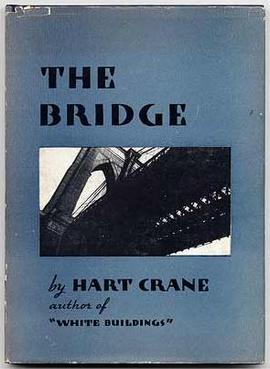 That poem, transcendent and strange, was received poorly when it was published in 1930 by Black Sun Press. Even today its place in our American 'canon' is often questioned.
The poem is about progress. A new, bright, American future. The 'great war' was over and America had come out strong and vital. The bridge was the ultimate symbol of that achievement. The growing pains were through, America was a grown-up country.
In 2006 Hart Crane: Complete Poems and Selected Letters was published. Writing in The New Yorker, Adam Kirsch called The Bridge 'an impressive failure. . .[that] varies wildly in quality, containing some of Crane’s best writing and some of his worst.'
I can't say I disagree. While I find the poem beautiful, it definitely leaves me with a sense of open-endedness. A sense that it was never fully realized. Sections of it crumble in your hands in a way Eliot never does. Perhaps it mirrors the fragility of its time. The 1930s were hardly the gold-coated promised land that people thought they would be.
 It uplifts, but it feels ephemeral.
Whitman's Crossing Brooklyn Ferry does a better job capturing a future bright with promise. I suspect that Crane's is a personal triumph. He was living with his lover, he woke to the bridge. It was a far cry from his Christian Scientist upbringing in Ohio. It was glorious. Understandably.
That it doesn't quite connect into a metaphor for the future America makes sense. There was another war on the horizon. A Great Depression.
And like Mishima, and countless other people around the world, homosexuality was also a dark spot. The reveling is magnificent, but the realities of the world find a way to enter back in.
At around noon on 27 April 1932, while the Orizaba was 275 miles north of Havana and 10 miles off the Florida coast -
This is familiar territory. The night before Hart Crane had hit on a crewman of the ship. Had been attacked. Had been humiliated. Crane, in pajamas and an overcoat, shows up on the rear deck. He was drunk. Had been drunk for years. He climbed the railing and maybe even said goodbye, then fell into the cold water. For two hours lifeboats searched. His body was never found.
Like Mishima, Crane had a clear love of aesthetic. He was a romantic. He was a visionary. He claimed that he saw the future. That it was bright. Like Mishima, he took a female lover, Peggy Cowley, who was the inspiration for The Broken Tower.
The two are vastly different. They are not parallels. But the closeted world of gay men in the history of the world is full of similar tales. Of elaborate 'masks' of the failed pick-up. Of the beatings and then the suicides.
The Brazilian navy took over the boat that was called the Orizaba in 1945, renaming her Duque de Caxis. The boat was scrapped in 1963.
A counterpoint:
In 1934 Katherine Hepburn took a trip to Mérida, Yucatán. Once there she filed for divorce from her husband of 6 years, Ludlow Ogden Smith. She then vacationed in Havana and went home.
I don't add this as a comment on heterosexual marriages. How they are easy to enter/exit. I add it as an example of the intersections of lives/loves and how these dramas play out on similar stages.

19 December 2012
Bewilderment
First off, over here, Eric Forbes gives us a list of books to look forward to in 2013.
Last year I did a run down of what I read, how I liked it, etc. This year I don't have a list for you. Sorry, I didn't keep track. And I moved.
But! I have started to write posts about books I have been reading. I will continue that as long as I can discuss them in some broader context and by the end of 2013 we'll have a list of things I read without even trying!
 Upon moving back to Santa Fe I have reconnected with old friends and places. I have been going to poetry readings and art openings. I have been at cocktail parties and, in general, been a real boy. A friend of mine had recently read David Ferry's Bewilderment. She recommended it, with a caveat:
Take it as a whole work.
The book is in sections. Each has a clear tone and arc to it. Each is a mix of poems and translations. The translations range from Virgil to Rilke to Cavafy to Horace. The connecting theme is one of time, and old age.
Ferry is 88. It is not my place to say that he is thinking about endings. But.
Aunt Nellie's picture was in the paper once,
Triumphantly posing with a large bottle,
Black widow spiders inside looking out,
As conscious as fireflies of their situation.
 Are we conscious of our situation? That is the question I took away from Ferry's book. I write about decay in my own poetry. I have been obsessed with the idea of entropy for years. But am I conscious of being in the jar?
So the 'jar' is life itself. The fact that we are born and begin to fall apart immediately. Cell walls start to break down, chemicals begin their depletion, etc. etc. etc.
That word, etc., is a good example of the jar. It is such a small word, a placeholder really. But it contains multitudes of the unspeakable.
If we follow that train of thought a bit, we arrive at all language being mere placeholders for the things we are really trying to say. 'Apples' is not the actual fruit. Shine or no shine. Red or green. All of it, placeholders.
And Ferry seems to be pointing out that his words are merely newer versions of the old. The translations bleeding into his poems and his poems informing the depth of the old. And they all speak with the same voice across time. We are merely the same. Placeholding away.
Last year I did a run down of what I read, how I liked it, etc. This year I don't have a list for you. Sorry, I didn't keep track. And I moved.
But! I have started to write posts about books I have been reading. I will continue that as long as I can discuss them in some broader context and by the end of 2013 we'll have a list of things I read without even trying!
Upon moving back to Santa Fe I have reconnected with old friends and places. I have been going to poetry readings and art openings. I have been at cocktail parties and, in general, been a real boy. A friend of mine had recently read David Ferry's Bewilderment. She recommended it, with a caveat:Take it as a whole work.
The book is in sections. Each has a clear tone and arc to it. Each is a mix of poems and translations. The translations range from Virgil to Rilke to Cavafy to Horace. The connecting theme is one of time, and old age.
Ferry is 88. It is not my place to say that he is thinking about endings. But.
Aunt Nellie's picture was in the paper once,
Triumphantly posing with a large bottle,
Black widow spiders inside looking out,
As conscious as fireflies of their situation.
Are we conscious of our situation? That is the question I took away from Ferry's book. I write about decay in my own poetry. I have been obsessed with the idea of entropy for years. But am I conscious of being in the jar?So the 'jar' is life itself. The fact that we are born and begin to fall apart immediately. Cell walls start to break down, chemicals begin their depletion, etc. etc. etc.
That word, etc., is a good example of the jar. It is such a small word, a placeholder really. But it contains multitudes of the unspeakable.
If we follow that train of thought a bit, we arrive at all language being mere placeholders for the things we are really trying to say. 'Apples' is not the actual fruit. Shine or no shine. Red or green. All of it, placeholders.
And Ferry seems to be pointing out that his words are merely newer versions of the old. The translations bleeding into his poems and his poems informing the depth of the old. And they all speak with the same voice across time. We are merely the same. Placeholding away.
07 December 2012
Lose Your Mother
Poetry readings and I don't always get along. I find them tiring. I communicate better with words on page than in the air around me. Listening for more than 20 minutes and I get a bit ADHD and start to examine the walls of the room I'm in for peeling paint.
I have a similar problem with music. I don't really absorb lyrics while listening. Not in a 'I understand the thesis of the song' kind of way. More in a 'words are happening' kind of way.
Tonight, J and I went to a great poetry reading at Collected Works in downtown Santa Fe. Muse Time Two is a series that pairs a local NM poet with a wider-known more established writer. The pairings often illuminate each authors work. I like the idea.
Tonight's reading was by Connie Voisine and Martha Collins. Voisine is the director of the writing program at NMSU in Las Cruces. Her poetry was beautiful.
Collins read from her books Blue Front (2006) and White Papers (2012). They are companion books about race, specifically race from a white American point of view.
Blue Front seems to be the stronger of the two books. It is centered around Collins' father witnessing the hanging in 1909 of Will James. There were 10,000 participants.
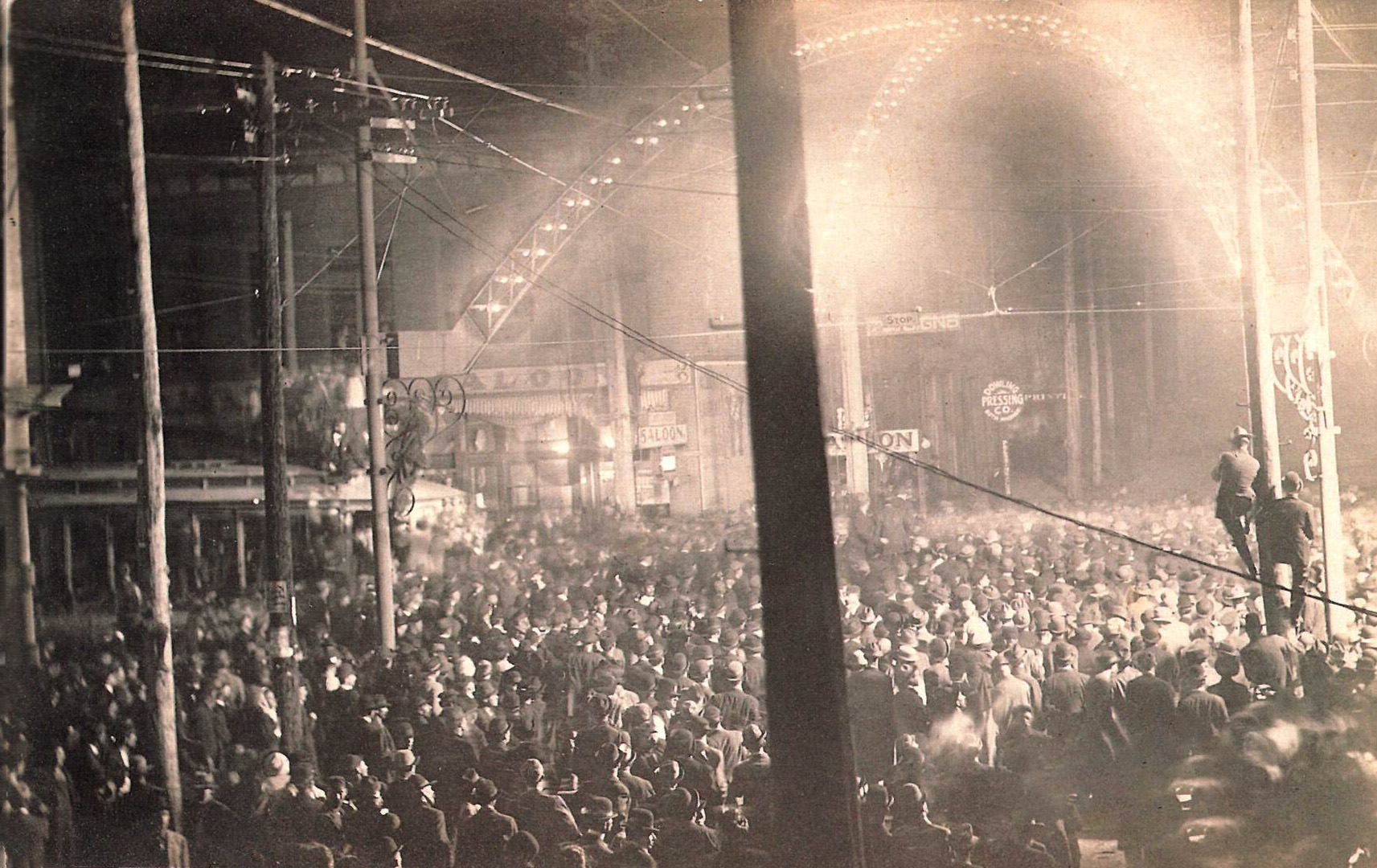
I want to let that number linger for a second. 10,000 people helped hang someone in 1909 in Cairo, Illinois in front of a restaurant named the Blue Front. In front of a 5 year-old boy. Below is a photo of the event.

The poems Collins read were a little too disjointed, a little too knowing. There was an aura of self-consciousness. Too aware of the topic. Obviously you are aware of it, but it was all a touch too blunt. Too 'white liberal guilt'. The moments of brilliance came in the unanswered and cut off questions. She had an entire poem with each line starting 'Because...' and not a one had an ending.
My stumbling into Collins poetry is an interesting coincidence. I just read Lose Your Mother by Saidiya Hartman. A similar examination of race but from the other side.
Hartman examines the African slave trade by taking a trip to Ghana. She attempts to connect with a place that is meant to be 'home'. She finds ambivalence and, in some cases, outright anger at her presence. At her insistence of bringing up the horrors of selling people.
Ghana's politics on slavery are not easy water to tread. There is a modern slave trade that continues to this day. The view is that you are selling strangers, criminals, the non-religious and is therefor not a problem. Hartman paints several scenes of people telling her that the trade was bad when white men did it. They caused the problem. Her attempts to get locals to address the nobles of Africa selling off their own is met with silence.
Both of these books attempt to address race in a new way. From a different entry point. Collins comes at it with poetry and by addressing her whiteness. And using that as a means to open up what her being that means in America. She addresses blackness by acknowledging she can only address whiteness.
Hartman attempts to come at the topic of slavery honestly. She wants to see how the African tribes were complicit in the trade. She admits that going to Ghana, standing in the old Elmina castle does nothing to fill the empty space she feels. As a white man reading her book, I felt like that is the problem of the slave trade. There is no way to fill that space.
Both of these women address race calmly, without anger or melodrama. They also do it by telling their own stories. Collins tells that of her father and that 10,000 strong lynch mob. Hartman writes herself into the narrative, allowing us to see her disappointment and struggle with the topic.
Hartman manages a delicate balance of listing those accountable while not pointing a finger at the reader. Collins is less successful, but she has less room to do so. It is not her topic to be gracious about. It is not a topic to be gracious about. It is to Hartman's credit that she has chosen to open the topic up in this way.
I am grateful for Hartman's abilities to let me, a white man, into the conversation. I feel like it comes across condescending to say, but it is true. Being honest about our feelings on race is the first step to even begin to pretend to fix the problem.
 |
| First image from a search - 'poetry reading' |
Tonight, J and I went to a great poetry reading at Collected Works in downtown Santa Fe. Muse Time Two is a series that pairs a local NM poet with a wider-known more established writer. The pairings often illuminate each authors work. I like the idea.
Tonight's reading was by Connie Voisine and Martha Collins. Voisine is the director of the writing program at NMSU in Las Cruces. Her poetry was beautiful.
Collins read from her books Blue Front (2006) and White Papers (2012). They are companion books about race, specifically race from a white American point of view.
Blue Front seems to be the stronger of the two books. It is centered around Collins' father witnessing the hanging in 1909 of Will James. There were 10,000 participants.
I want to let that number linger for a second. 10,000 people helped hang someone in 1909 in Cairo, Illinois in front of a restaurant named the Blue Front. In front of a 5 year-old boy. Below is a photo of the event.
The poems Collins read were a little too disjointed, a little too knowing. There was an aura of self-consciousness. Too aware of the topic. Obviously you are aware of it, but it was all a touch too blunt. Too 'white liberal guilt'. The moments of brilliance came in the unanswered and cut off questions. She had an entire poem with each line starting 'Because...' and not a one had an ending.
My stumbling into Collins poetry is an interesting coincidence. I just read Lose Your Mother by Saidiya Hartman. A similar examination of race but from the other side.
Hartman examines the African slave trade by taking a trip to Ghana. She attempts to connect with a place that is meant to be 'home'. She finds ambivalence and, in some cases, outright anger at her presence. At her insistence of bringing up the horrors of selling people.
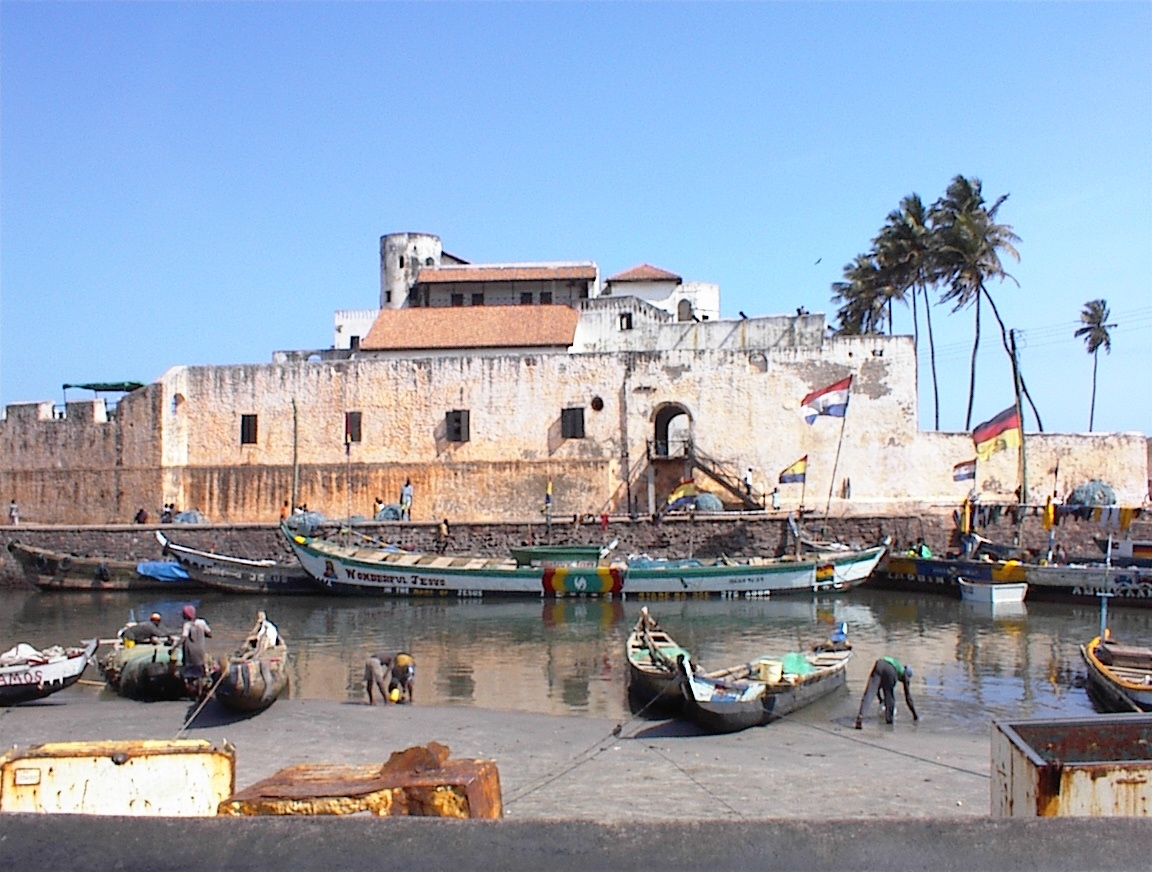 |
| Elmina Castle - Portuguese slave trading post |
Both of these books attempt to address race in a new way. From a different entry point. Collins comes at it with poetry and by addressing her whiteness. And using that as a means to open up what her being that means in America. She addresses blackness by acknowledging she can only address whiteness.
Hartman attempts to come at the topic of slavery honestly. She wants to see how the African tribes were complicit in the trade. She admits that going to Ghana, standing in the old Elmina castle does nothing to fill the empty space she feels. As a white man reading her book, I felt like that is the problem of the slave trade. There is no way to fill that space.
Both of these women address race calmly, without anger or melodrama. They also do it by telling their own stories. Collins tells that of her father and that 10,000 strong lynch mob. Hartman writes herself into the narrative, allowing us to see her disappointment and struggle with the topic.
Hartman manages a delicate balance of listing those accountable while not pointing a finger at the reader. Collins is less successful, but she has less room to do so. It is not her topic to be gracious about. It is not a topic to be gracious about. It is to Hartman's credit that she has chosen to open the topic up in this way.
I am grateful for Hartman's abilities to let me, a white man, into the conversation. I feel like it comes across condescending to say, but it is true. Being honest about our feelings on race is the first step to even begin to pretend to fix the problem.
03 December 2012
The Book of Nightmares

a small fire goes on flaring in the rain, in the desolate ashes.
No matter now, whom it was built for,
it keeps its flames,
it warms
everyone who might wander into its radiance,
a tree, a lost animal, the stones,
because in the dying world it was set burning.
This is how the final section of Galway Kinnell's Book of Nightmares begins. What comes before and after is a harrowing and deeply dark journey through a strange wood. He recounts his daughter's birth, he dedicates it to her after he is gone and she is orphaned. The book in whole is dedicated to both of his children.
To call the book-length poem 'dark' is honestly to generalize what is going on. Nightmares was written in 1971 when Kinnell was 44. It starts with references to his young daughter and then veers into the Vietnam war and the civil rights movement. There are bears and fires and old crones drawing runes. The whole is buried in a Medieval feel. A sense of hearths and mud houses. Of black death and superstition.
He is equating our world with theirs.
It was this strange alchemy that drew me in from the first few words.
When I was 19 we had just come out of the Clinton years. It was a national high. I'm not even referring to the politics of the era, I was honestly an unengaged teenager and the time I lived in allowed that. The Clinton years were good for the country. We were seemingly prosperous, had come out of the 'culture wars' with new found tolerance (HA!) and were about to elect Al Gore President.
The 2000 election was not that election though.
The cynicism of a teenager mixed with the deep cynicism of the early 2000s is hard to explain. I think the US was in a fog post-election. Unwilling to really look at what had happened and deeply distrustful of the entire 'experiment' of American democracy.
The world seemed dark. Seemed like the world of the 1970s. Or, at least, what a 19 year-old thought the 70s were like.
The first section of the poem ends with:
And in the days
when you find yourself orphaned,
emptied
of all wind-singing, of light,
the pieces of cursed bread on your tongue,
may there come back to you
a voice,
spectral, calling you
sister!
from everything that dies.
And then
you shall open
this book, even if it is the book of nightmares.
I read those lines, and still do today, as an address to me. Telling me that even in the darkness there is a small fire, a voice. My own voice. The voice of others. And that will be what saves us.
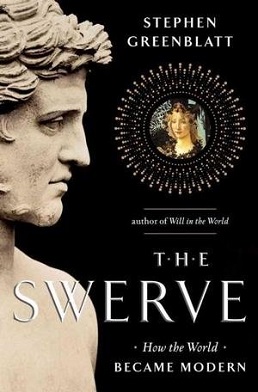
The Swerve details Poggio Bracciolini's discovery in 1417 and the resulting spread of the text.
Greenblatt argues that Lucretius' poem sowed the seeds of the Rennaissance, and thus all of modern thought.
I don't know if I agree with him. But the poem spread like wildfire and espoused a decidedly secular view of the world. It even went so far as to deny god in creating the universe, to deny fate. It names atoms. It talked up the beauty in living for pleasure not pain.
It was not a 1417 kind of work and was banned, burned and tried to be put back in its box numerous times.
Ideas are hard to kill. The voice in the dark is a thread that leads to whatever warmth may be needed.
Kinnell meant his poem to be a modern take on T.S. Elliot's Wasteland. An attempt, however futile, to reconnect the world in a moment of upheaval. The Vietnam War and the civil rights struggle were tearing the country apart. The promises that after World War II things would be 'normal' again, would be 'better' had proven false. He retreated to the woods, to nature, to the occult. He tried to bleed himself of it.
In 2000 these words seemed like prophecy. Today, they seem even more prescient. They call from the past and want something from us. We are tasked with building a fire, with calling to those lost in the woods. With building a shelter and dredging the past.
In 2000 that kept me moving. Kept me wanting to do this whole 'writing' thing. Today, even more so.
Subscribe to:
Posts (Atom)